
In a world saturated with agencies, it’s easy to be swayed by false promises and dubious SEO techniques, all wrapped in misleading rhetoric.
Unscrupulous individuals also exist, ready to relieve you of your money by overstating their skills in SEO and marketing.
Here are a few tips to help you spot them and avoid them, while working with SEO professionals who adopt solid and honest practices. We’ll end with a small local case study, using professional tools to assess the credibility of an SEO agency that recently tried to sell us their services for marcwiner.com, our in-house website with more than 700,000 visitors per month.
1. The promise to rank you #1 on Google
It’s surprising to see that some SEO “professionals” still win clients by promising number-one rankings.
This approach is not only widespread but also effective for some, despite its deceptive nature. Any competent SEO can achieve a first-page ranking for irrelevant keywords or ones with no meaningful search volume, which doesn’t necessarily translate into more qualified traffic, revenue, or leads for your site.
The truth is that no one can guarantee specific results with Google’s algorithm, which is constantly evolving, minute by minute. At MACCUS, we take a holistic, cumulative approach to optimize SEO for the long term and mitigate the risks tied to algorithm changes.
2. The promise of a short time horizon
A common but misleading promise is quick SEO results. Some agencies or consultants may assure you of spectacular success in a short time, suggesting they have secret or innovative methods.
In reality, SEO is a long-term process that requires patience and ongoing effort. Strategies that promise immediate gains risk using questionable techniques that could ultimately harm your rankings and your online credibility. Sustainable SEO progress relies on ethical practices and the creation of high-quality content aligned with search engine guidelines.
3. A purely transactional relationship
Pay attention to how an agency or consultant presents their services. It can indicate how the relationship will develop.
True collaboration is built on mutual understanding and a shared commitment to success, rather than a simple transaction.
4. Outdated case studies
At Maccus, our most recent and continuously updated case study is Marcwiner.com, our own content website with 700,000 visitors per month. This highlights the importance of always checking the relevance and timeliness of the case studies presented in the SEO field.
Since SEO evolves daily, a success from several years ago may no longer be meaningful today. It’s crucial to rely on current, effective examples to stay on top of best practices and strategies that truly work in today’s online marketing environment.
How MACCUS can help you recognize a bad agency
MACCUS offers an evaluation service to identify unreliable SEO agencies. By reaching out to us, you benefit from neutral expertise to avoid the pitfalls.
For the sake of transparency and to avoid any conflict of interest, if you use our evaluation services, we will not be able to accept you as clients until after a four-month period. This approach guarantees our impartiality and your safety in choosing a trusted agency.
The case of a bad local agency
To illustrate the effectiveness of our evaluation service, let’s take the example of an SEO agency recently reviewed by our tools. This agency promised spectacular results in a few weeks, using testimonials and case studies with no real substance.
Moreover, their strategy relied on an exaggerated presence on LinkedIn, with constant posts and aggressive marketing aimed at masking their lack of tangible results.
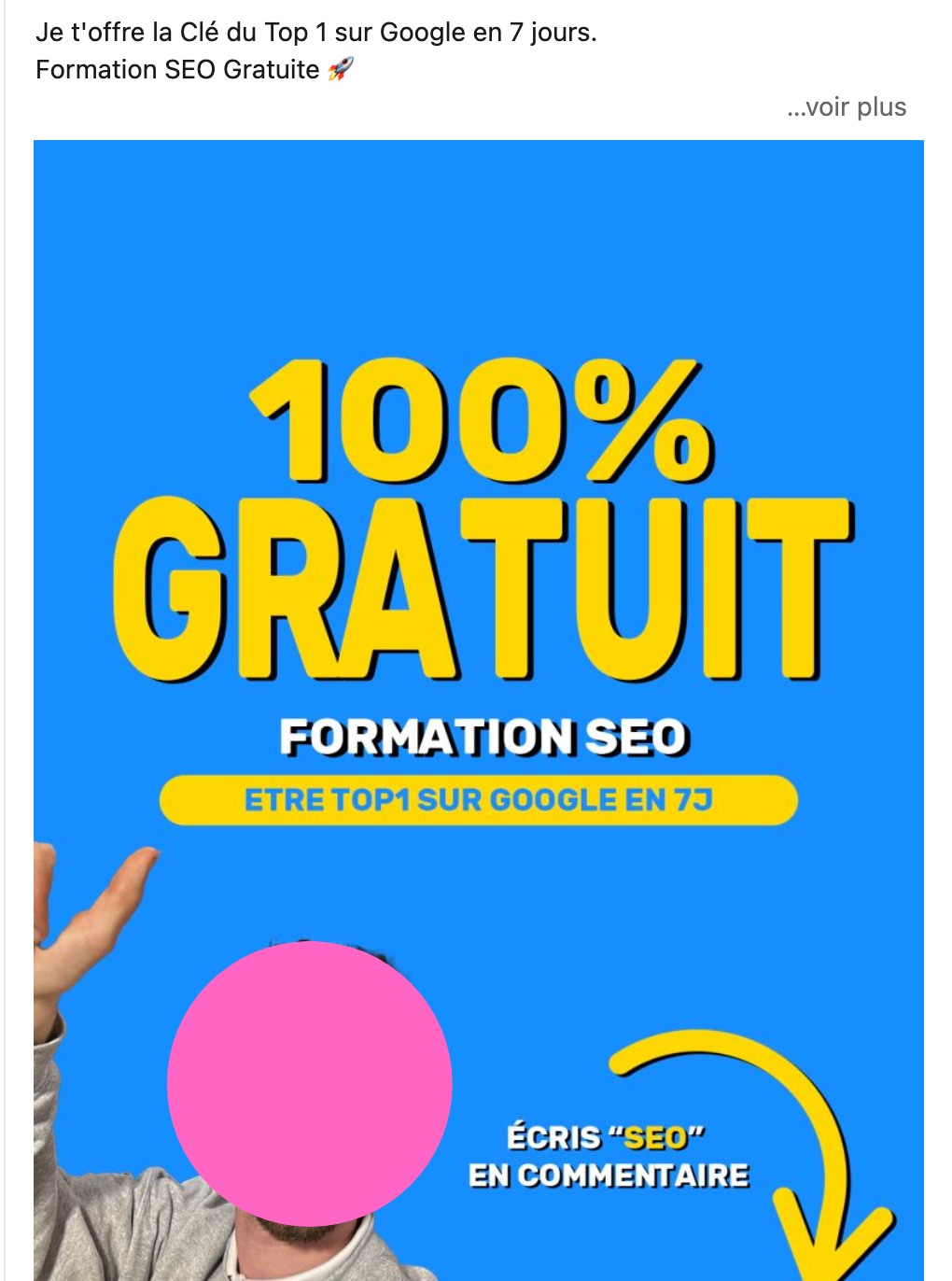
The promise of fast results, even if it involves deceptive practices, doesn’t necessarily call into question their SEO skills, which can indeed be real, though showcased in the worst possible way.
Given the confidentiality of the agency’s client portfolio, our evaluation will focus on reviewing their own website to understand the concrete application of their SEO expertise. At MACCUS, we refine our site’s SEO by employing a combination of strategies, including link building—benefiting from access to marcwiner.com and its high authority—advanced on-page SEO techniques, as well as targeted local SEO. This holistic approach ensures increased visibility despite the recent launch of our site.
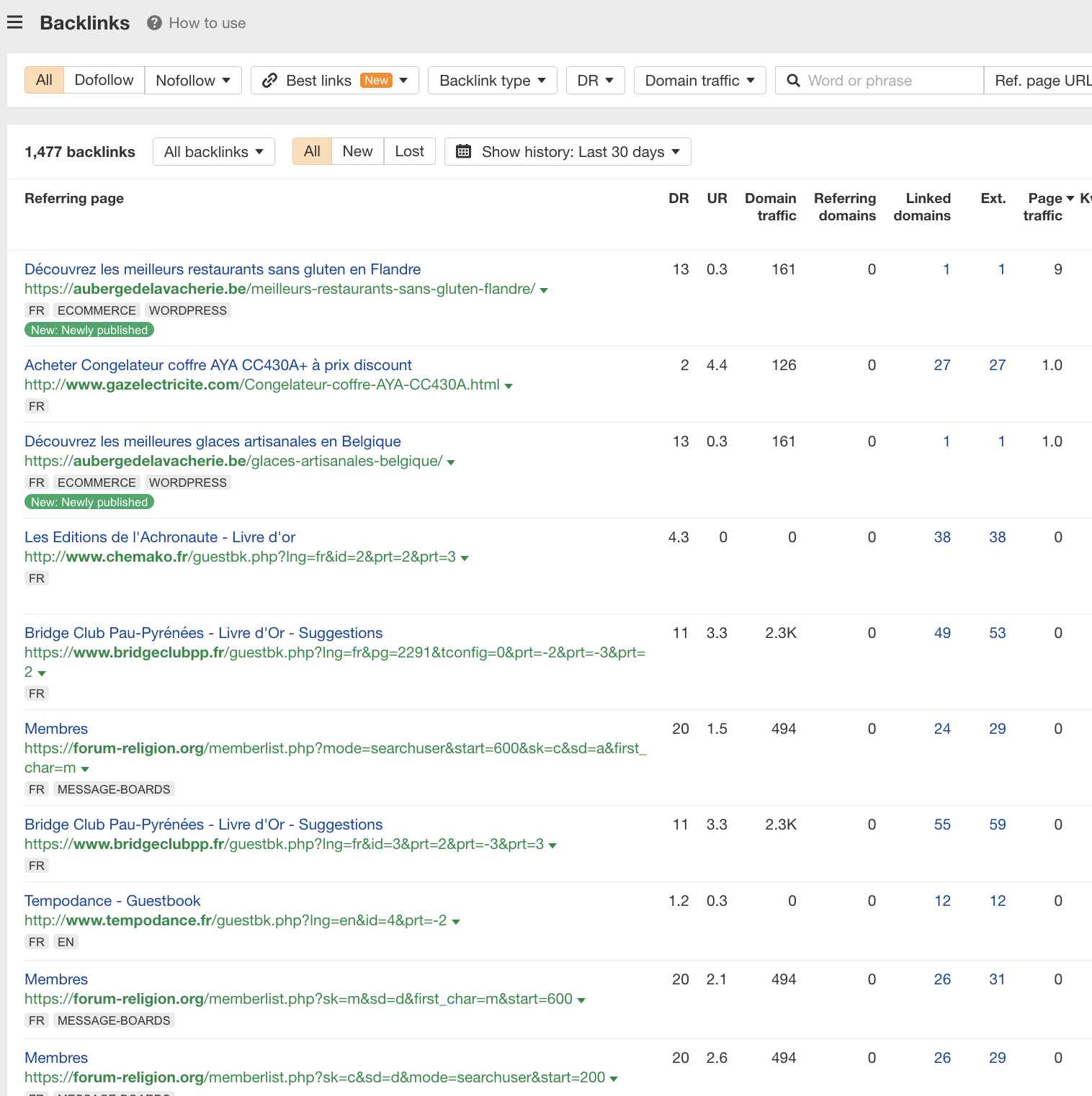
By starting our analysis with an in-depth review of the agency’s backlinks via our specialized tools, a glaring anomaly quickly emerges: a surprising number of links point to their site.
For a supposedly new agency, the scale of these links raises questions, casting doubt on the likelihood of having amassed such a volume of clients—who are, moreover, willing to promote the agency on their own platforms, in full view and knowledge of their competitors.
However, in theory, such a situation is not entirely impossible. To refine our analysis, we should therefore take a closer look at the specific nature of the anchors used in these links, the URLs (already looking strange), and the specific pages.
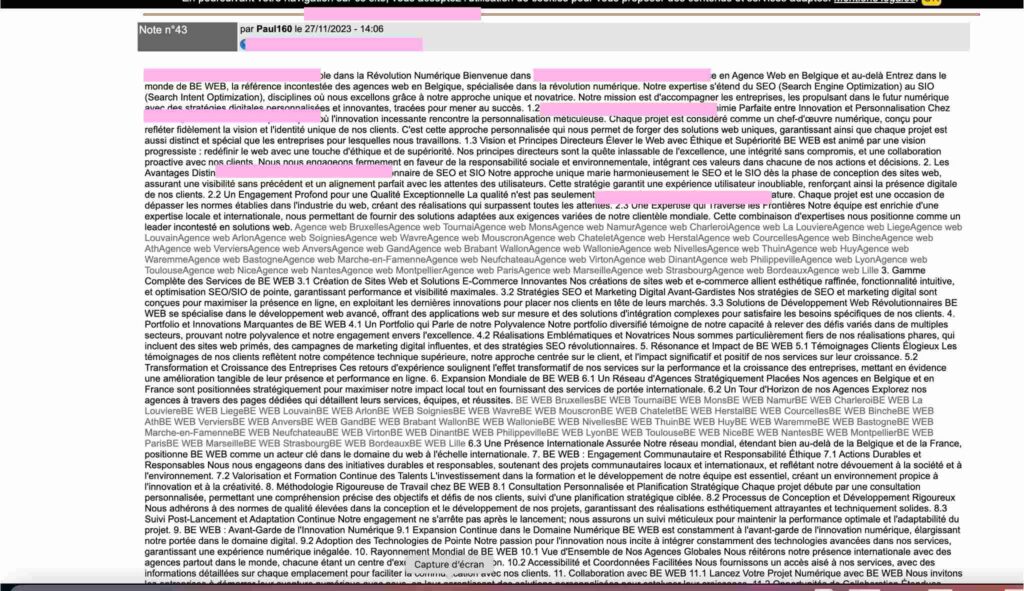
Our investigation reveals a questionable practice on a site presenting itself as a bridge club, but which upon inspection turns out to be a façade. This site contains a jumble of incoherent text, saturated with keywords likely to be targeted by the agency.
Such a method falls under “Black Hat” SEO—tactics that are not only frowned upon by Google and subject to penalties once detected, but have also been ineffective for several years. This discovery highlights not only an unethical approach to organic SEO, but also a blatant lack of understanding of the current principles that govern search engine optimization.
Proof: our tool estimates their total number of visitors over the year at… 3
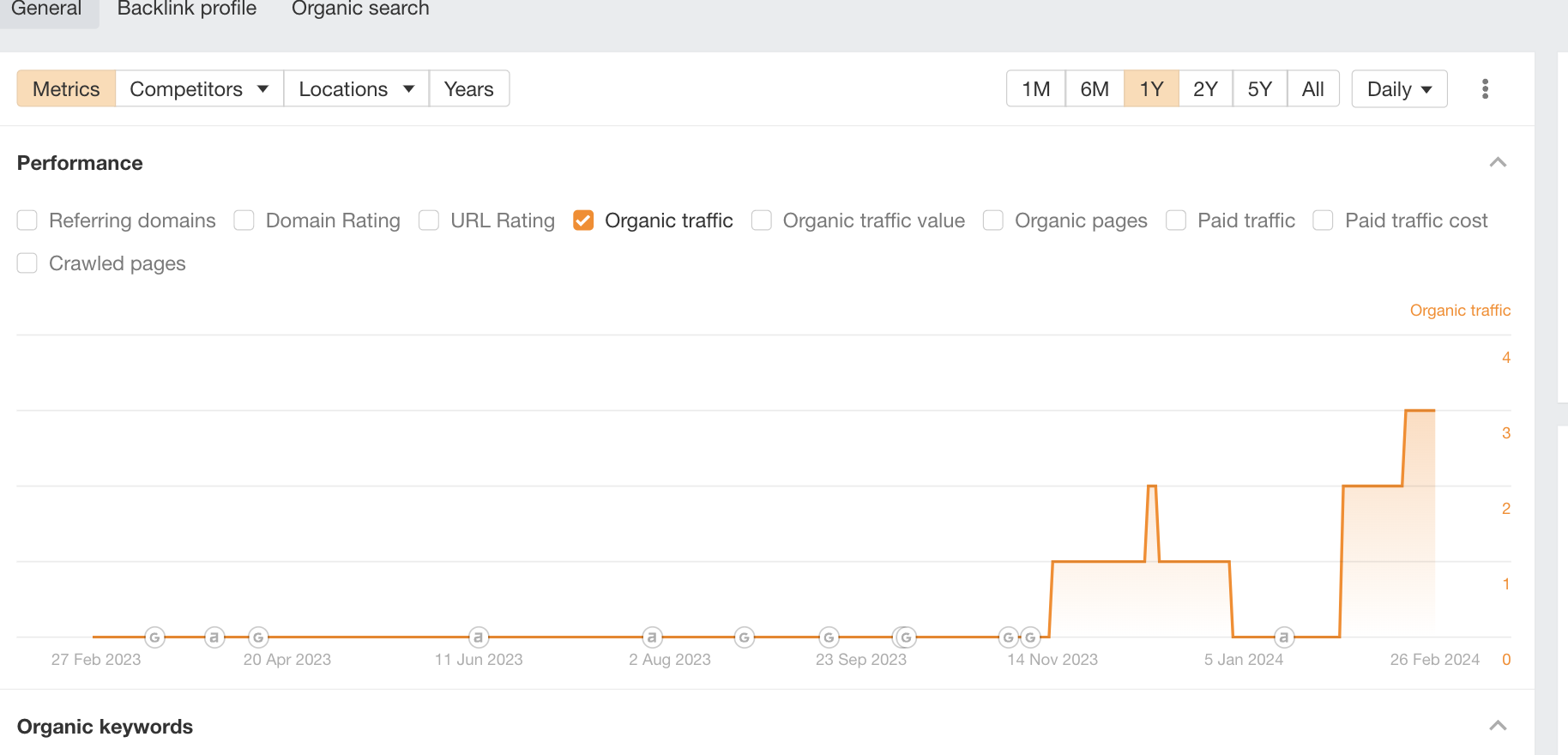
In summary, using such tactics on their own site is a clear indicator: if you choose their services, expect to have to start over from scratch with a new site and a brand-new domain name. These methods, not only outdated but also penalized by Google, severely compromise the longevity and integrity of your online presence.