Just Eat has paused a trial of AI-generated menu photos after the tool produced images such as a fried egg and sausages floating in a glass of cola for a breakfast roll listed as “Breakfast Soda,” the British trade magazine The Grocer reported on October 20, 2026. The delivery platform was generating the images for independent restaurants that had no photos of their own. According to the Irish news site The Journal, Just Eat says every AI image is manually checked by a person.
The Independent ran the story on Monday, October 19, 2026, after customers shared the images on social media. Just Eat apologized in a statement and said it was removing the inaccurate images. It has paused the rollout and plans to keep developing the tool, The Journal reported on October 20.
The trial was meant to let smaller independent takeout restaurants add images to their menus quickly and cheaply, according to The Grocer. Restaurant owners also use generative AI for tasks they check themselves, such as replying to customer reviews or working out what a supplier’s price increase will cost. In Just Eat’s trial, the platform itself used it on the restaurant’s storefront.
A menu taken literally
In some cases, the AI appears to have taken the wording of the listings literally, The Grocer reported. “Garlic Bread Plane” [sic] became an airplane made of bread on a plate. “Burger Sauce” produced a miniature burger in a small sauce pot, and “Cheese Roll” turned into sushi rolls with cheese fillings.
A sauvignon blanc whose flavor notes mentioned watermelon showed up as chunks of watermelon floating in a glass of wine. One customer quoted by The Grocer called the “Breakfast Soda” image “the actual worst thing I’ve ever seen.”
The Independent described a restaurant in Northern Ireland that offers a range of soda breads, the popular Irish breakfast sandwiches. The images generated for its menu appeared to show sausages, bacon and fried eggs floating in pint glasses of soft drinks. In many instances, the paper noted, the AI correctly imagined full English breakfasts or generic-looking curries.
In Ireland, scampi turns into sushi
The Journal found more examples on Irish takeout menus. The tool “mistook a batter burger for deep-fried buns,” the site wrote. The image showed a beef burger between what looked like two battered buns. Scampi, a popular deep-fried option on Irish menus, was illustrated with a picture of sushi.
A smoked cod listing with “wheat flour” in its description showed a fish fillet topped with what appeared to be loose flour. For a doner kebab whose description listed the ingredients of the flatbread, the image laid those ingredients out on a plate, with no kebab in sight. Basic items such as bottled water and sauces also tripped up the tool, The Journal noted. In the app, the images carried an “AI generated” label, according to The Journal and The Independent.
Just Eat’s response
“We want partners on our platform to show photos that accurately reflect their dishes so that our customers can be confident in what they are ordering and happy when their food arrives,” a Just Eat spokesperson said in a statement quoted by The Grocer and The Independent. “We work with tens of thousands of small restaurants on their food imagery, including funding professional local photographers.”
The spokesperson continued: “We’ve been trialling AI-enhanced images and as with any new technology, it isn’t always quite right the first time. We’re sorry for any inaccurate images that have been posted. We’re in the process of removing them and have paused rolling this out while we further develop the tool to ensure it best serves our partners and customers.”
The manual check the company describes, image by image, still let the flour-covered fish through, The Journal pointed out. Restaurants can opt out of the trial and upload their own photographs at any time, the site added.
One rule for restaurants, another for the platform
Just Eat does not allow restaurants to use their own AI-generated images, The Journal noted. Just Eat’s help page for restaurant partners in Ireland, updated on February 19, 2026, spells it out in its tips for getting photos approved: “Use real photos owned by you, don’t use AI-generated images.” For dish photos, the first tip reads: “Show the product exactly as it’s served or sold.”
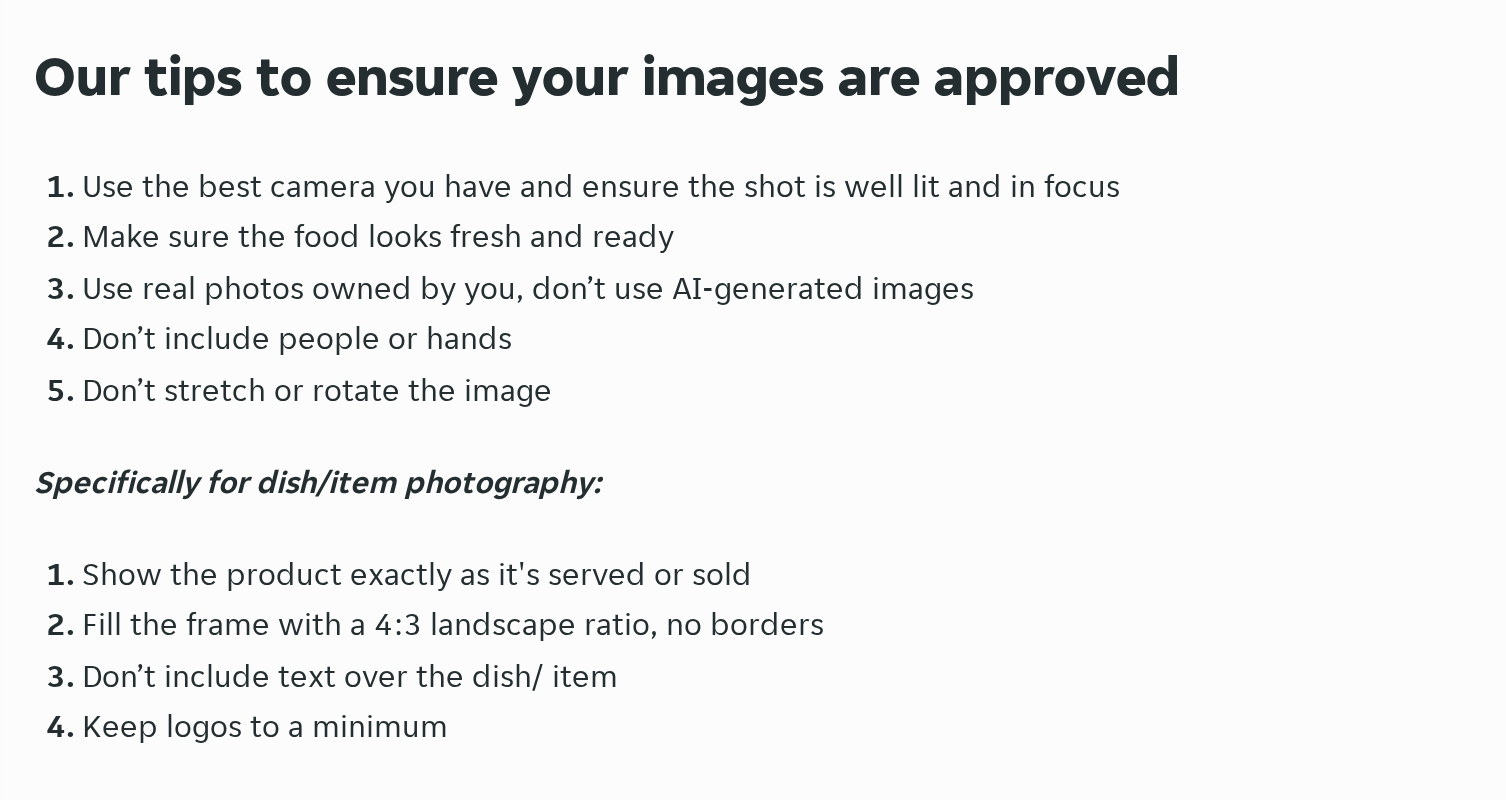
Asked by The Journal about that distinction, the company said it wanted to ensure images were accurate and realistic, and to keep use of the technology tightly controlled.
The same help page puts a number on what photos are worth. According to Just Eat, items with images are added to carts four times more often, and an item gets an average of 16% more orders once it has a photo. The page does not explain how those figures were measured.
The open questions
Just Eat calls them “AI-enhanced images.” The published examples show images generated from menu text, with no photo of the dish to start from. According to The Journal, Just Eat had been testing the technology for the past few months, including on new menu items, and used images of similar products to generate details such as plating, backgrounds and pizza crusts.
Several things remain unknown: how many restaurants and images were involved, which AI model was used, what restaurants were told before the images went live, and when the rollout might resume. None of the reports places the trial outside the UK and Ireland. Just Eat ended its operations in France on December 9, 2024. In Belgium, Just Eat Takeaway.com operates under the Takeaway.com brand.
What it means
The trial changes who makes the dish photo. Just Eat’s rules give that job to the restaurant, which must supply a real photo it owns. With this tool, the platform builds the storefront itself from a few words on the menu, and the customer sees a dish nobody photographed.
The “AI generated” label tells customers where an image came from. It says nothing about whether the image matches the food that arrives, the very thing Just Eat requires of restaurants. Google’s Search guidance for site owners targets a different problem, deceptive authorship information, and calls fabricated creator profiles that use AI-generated headshots “a form of deception.” Just Eat labeled its images; the failed ones simply showed something other than the dish.
Suspicion of AI has reached restaurant reviewing too: on October 16, D Magazine accused the Michelin Guide of using AI to write its new Dallas listings, which Michelin denies. TechRadar argued on October 20 that the bigger risk may be the believable images: a wrong-sized dish or a missing topping is easier to miss than sausages in cola. In the same piece, Michael Bortinger, director of marketing and partnerships at Tastewise, explained why: “An image model has no concept of a specific dish. It renders the average of everything labeled ‘burger’, and better tools just make that average more convincing.”
Just Eat says it will keep developing the tool and has given no timeline. Two questions remain open: what human check will apply to the next version, and whether restaurants will have to opt in before the platform illustrates their menus.
Sources
- JustEat apologises over AI menu pictures including bacon and eggs floating in cola, The Independent (via AOL), October 19, 2026
- JustEat apologises for AI-generated slop after bizarre takeaway pictures found on Irish menus, The Journal, October 20, 2026
- Just Eat pauses AI imagery trial in wake of ‘absolutely rank’ outputs, The Grocer, October 20, 2026
- Photos on your menu, Just Eat Ireland, updated February 19, 2026, accessed October 21, 2026
- Just Eat’s AI put bacon and eggs in a glass of cola, and it’s exposed a much bigger problem with AI, TechRadar, October 20, 2026
- Just Eat Takeaway.com confirms decision to end operations in France following consultation, Just Eat Takeaway.com, December 2, 2024
- Creating helpful, reliable, people-first content, Google Search Central, updated October 5, 2026
Header image: MACCUS diagram. Data: The Grocer and The Journal, October 20, 2026